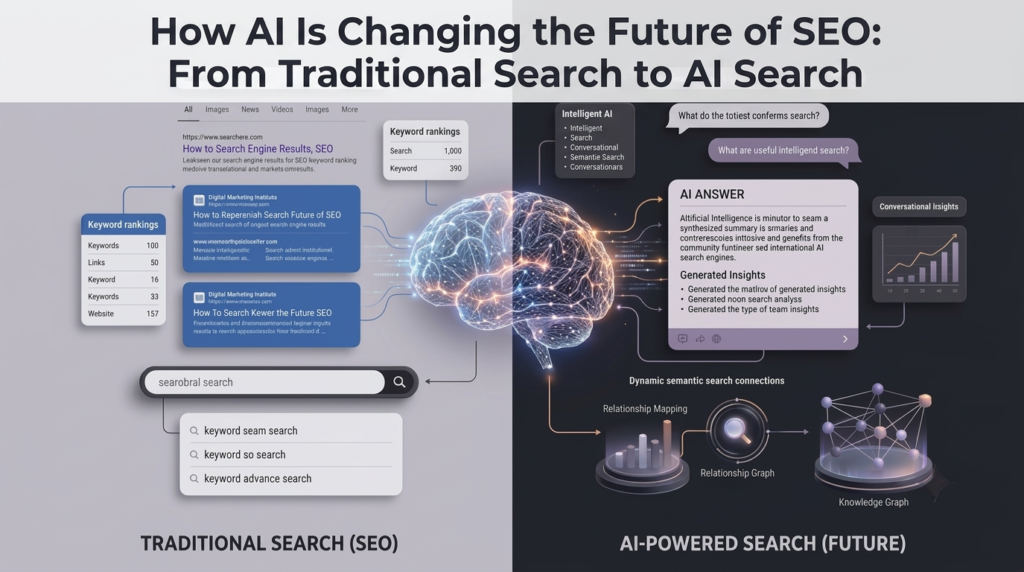
Remember when searching for something on Google meant typing a few keywords, scrolling through website links and opening multiple pages to find the right answer? Things are changing quickly. Today, people are increasingly using AI-powered search experiences to ask questions, compare products, explore topics and get information through conversational answers.
With technologies such as Google AI Overviews, Google AI Mode and AI-powered platforms like ChatGPT and Perplexity, the way people discover information online is evolving. This transformation is changing how businesses approach Search Engine Optimization (SEO).
So, what does this mean for website owners, businesses and digital marketers? Is traditional SEO becoming outdated? Not really. Instead, SEO is adapting to a new search environment where visibility is no longer just about ranking on Google’s first page.
Let’s understand the future of SEO in 2026 and how AI search optimization is changing the digital marketing landscape.
What Is the Difference Between Traditional Search and AI Search?
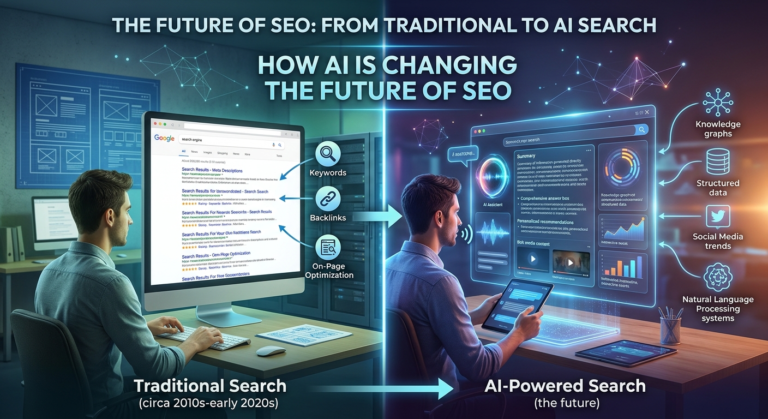
Traditional search engines mainly display a list of relevant websites based on a user’s search query. Users visit these websites, compare information and find the answers they need.
AI-powered search works differently. Instead of only displaying website links, it can understand the context of a question, combine information from different sources and generate a conversational response.
For example, imagine someone searches for “Best digital marketing courses for beginners in Ahmedabad.”
In traditional search, Google displays websites, advertisements and business listings related to the query. In an AI-powered search experience, users may receive a summarised comparison covering course options, learning opportunities and other relevant details, along with links to supporting sources.
This makes it important for businesses to create content that is not only relevant to search queries but also useful, reliable and easy to understand.
How AI Is Transforming SEO in 2026
AI is influencing both how people search and how search engines discover and present information. Here are some major changes shaping the future of SEO.
1. Search Is Becoming More Conversational
People are moving beyond short keyword searches and asking detailed questions in natural language.
Instead of searching for “SEO tips”, a user might ask, “How can a small business improve its Google ranking without spending money on advertisements?”
AI-powered search experiences are designed to understand these longer, more specific questions and provide contextual answers.
For digital marketers, this means creating content that addresses actual user questions rather than focusing only on individual keywords.
2. Google AI Overviews Are Changing Search Results
Google AI Overviews provide AI-generated summaries for certain search queries, helping users understand topics without having to visit multiple websites immediately.
These summaries may include information from different online sources and links to relevant websites.
For businesses, appearing as a supporting source in these AI-generated responses can create additional opportunities for online visibility. However, inclusion is not guaranteed and still depends on Google’s systems.
3. Content Quality Is Becoming More Important
AI tools can generate large amounts of content within minutes. However, publishing more content does not automatically mean better rankings or greater visibility.
Search engines continue to prioritise helpful, reliable and people-first information.
Businesses should focus on creating original content that includes useful explanations, practical examples, expert insights and information that genuinely answers customer questions.
For example, instead of publishing a generic article about SEO, a digital marketing institute could explain how a local business in Ahmedabad can improve its online visibility through local SEO strategies.
4. Voice Search and Long-Tail Queries Are Growing
People are becoming comfortable asking questions through voice assistants and conversational AI platforms.
Queries such as “Which digital marketing course is suitable for freshers in Ahmedabad?” reflect how people naturally search for information.
This makes conversational keywords, question-based headings and clear answers valuable parts of a modern SEO strategy.
What Is AI Search Optimization and Why Does It Matter?
AI Search Optimization refers to improving a website’s visibility across AI-powered search experiences and answer platforms.
It is closely associated with terms such as Answer Engine Optimization (AEO) and Generative Engine Optimization (GEO).
While traditional SEO focuses on improving a website’s visibility in search engine results, AI search optimization also considers how useful and relevant a website’s information may be when AI systems generate answers.
Some important practices include:
Creating original, informative and trustworthy content.
Answering specific questions clearly.
Using descriptive headings and organised content.
Including relevant facts, examples and expert insights.
Maintaining accurate business and website information.
Building website authority through relevant, credible sources and mentions.
Ensuring that important website content can be crawled and indexed.
It is important to understand that there is no guaranteed shortcut to appearing in AI-generated answers. Google’s guidance continues to emphasise strong SEO fundamentals and helpful content rather than special AI-ranking tricks.
SEO Strategies Businesses Should Follow in 2026
As search behaviour evolves, businesses need to review their existing SEO strategies and focus on long-term visibility.
Here are some practical strategies worth adopting:
1. Focus on Search Intent: Understand what users actually want to know before creating content. Informational, commercial and transactional searches require different approaches.
2. Create Helpful and Original Content: Avoid publishing repetitive articles that simply rephrase information already available online. Add real examples, practical insights and useful explanations.
3. Strengthen E-E-A-T: Focus on Experience, Expertise, Authoritativeness and Trustworthiness. Show readers why your content is reliable and who is responsible for creating it.
4. Improve Technical SEO: Ensure that your website loads properly, works on mobile devices, has a clear structure and allows search engines to crawl important pages.
5. Optimise for Local Search: Businesses should maintain accurate Google Business Profile information, collect genuine customer reviews and create useful location-specific content.
6. Track More Than Just Rankings: Monitor organic traffic, search impressions, engagement, enquiries and conversions. Also pay attention to how people discover your website through emerging AI search experiences.
Will AI Replace Traditional SEO Professionals?
Despite the growing influence of AI, traditional SEO knowledge remains relevant. AI can assist with keyword research, content planning, technical analysis and reporting, but successful SEO requires human judgement.
Professionals still need to understand audience behaviour, develop content strategies, analyse competitors, identify website issues and make decisions based on business objectives.
In fact, the changing search landscape creates opportunities for digital marketers who understand both traditional SEO and AI search optimization.
Some emerging areas of focus include:
SEO and AI Search Specialists
Technical SEO Executives
Content Strategists
GEO and AEO Specialists
Digital Marketing Analysts
SEO Consultants
Learning how to combine AI tools with practical SEO knowledge can help aspiring professionals prepare for these evolving roles.
How to Build SEO and AI Search Optimization Skills in Ahmedabad
If you are a student, fresher or working professional interested in digital marketing, understanding the relationship between traditional SEO and AI search is a valuable starting point.
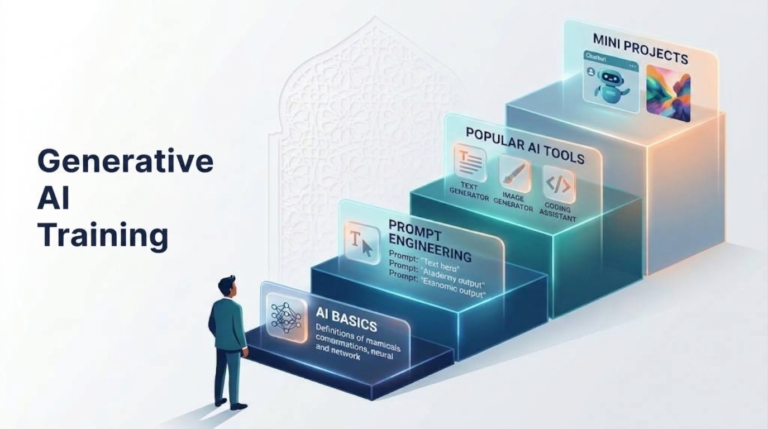
You can begin by learning keyword research, on-page SEO, technical SEO, content marketing and Google Analytics. Once you understand the fundamentals, explore AI tools that can support content research, SEO analysis and marketing automation.
Working on practical assignments is equally important. Try conducting a website SEO audit, creating a keyword strategy for a local business or developing a content plan targeting location-specific searches.
At IIEDM Institute Ahmedabad, learners can explore industry-focused digital marketing training and develop practical knowledge of modern marketing techniques. With an emphasis on industry-relevant learning, hands-on projects and exposure to evolving digital tools, students can work towards building skills suited to the changing digital marketing industry.
Choosing the right training programme can help you understand not just how search engines work today, but also how to adapt as search technology continues to evolve.
Conclusion
The future of SEO in 2026 is not about choosing between traditional search and AI search. It is about understanding how both experiences work together.
As AI-powered search becomes more common, businesses will need to focus on meaningful content, website credibility, technical performance and user experience. Traditional SEO fundamentals will continue to provide the foundation, while AI search optimization will become an important part of a broader digital marketing strategy.
For aspiring digital marketers, this is an opportunity to learn, experiment and develop skills that go beyond traditional keyword ranking. The future belongs to professionals who can understand changing search behaviour and create meaningful online experiences for users.