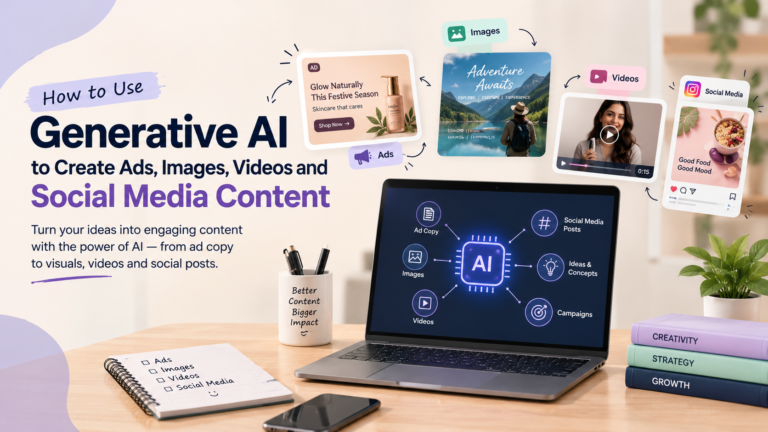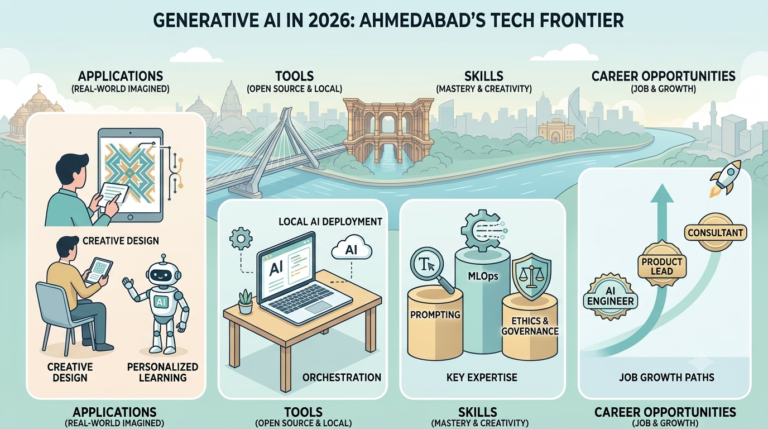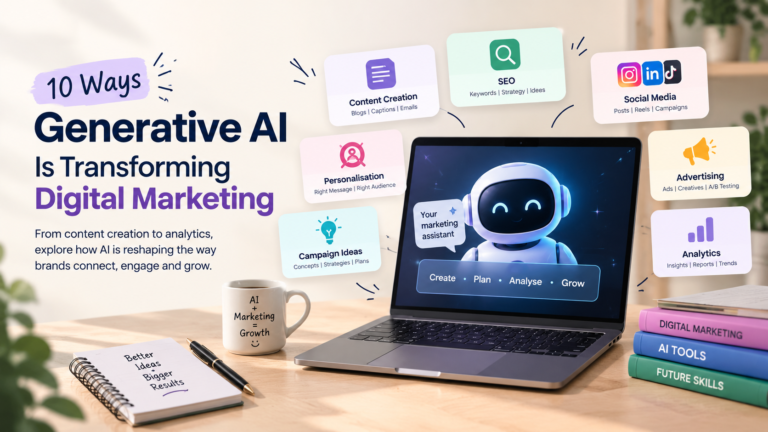
Artificial Intelligence is becoming a part of everyday life. From writing emails and creating social media posts to generating images, analysing information, and automating business tasks, AI tools are changing how people work.
One area where this change is especially noticeable is digital marketing. Businesses are exploring AI to create content, understand customers, plan campaigns, and improve productivity. As a result, students, fresh graduates, entrepreneurs, and working professionals are increasingly interested in learning AI.
But if you are a beginner, an important question is: Where should you start?
With so many AI tools and courses available, it can be difficult to understand what to learn first. If you are exploring Generative AI training in Ahmedabad, this guide will help you understand the basics, important skills, useful tools, and practical learning steps.
What Is Generative AI and How Does It Work?
Generative AI is a type of Artificial Intelligence that can create new content based on instructions or prompts provided by users.
Unlike traditional software that mainly follows predefined instructions, Generative AI can generate different types of output, including:
- Text, articles, emails, and social media captions.
- Images, illustrations, and creative designs.
- Videos and audio content.
- Presentations and reports.
- Computer code and technical explanations.
For example, a student can ask an AI tool to explain a difficult marketing concept, while a business owner can use it to brainstorm promotional ideas.
Tools such as ChatGPT, Google Gemini, and Microsoft Copilot have made these capabilities more accessible to beginners. However, understanding how to use them effectively is just as important as knowing their names.
Why Should Beginners Learn Generative AI in Ahmedabad?
Ahmedabad has businesses across industries such as textiles, retail, education, manufacturing, healthcare, and professional services. Many of these businesses use digital platforms to reach customers, promote products, and manage their online presence.
AI can support these activities by helping teams create content, organise information, analyse customer feedback, and improve repetitive workflows.
For students and professionals, learning AI can help develop skills that are useful across different industries.
Some benefits include:
- Improved productivity: Complete certain repetitive tasks more efficiently.
- Creative assistance: Explore new ideas for content, designs, and campaigns.
- Better research support: Organise information and generate initial research ideas.
- Digital marketing applications: Support SEO, social media, advertising, and content planning.
- Career development: Add relevant AI knowledge to an existing professional skill set.
Learning AI does not automatically guarantee a job. Its value comes from understanding how to apply it to real problems.
What Should Beginners Learn First? A Step-by-Step Guide
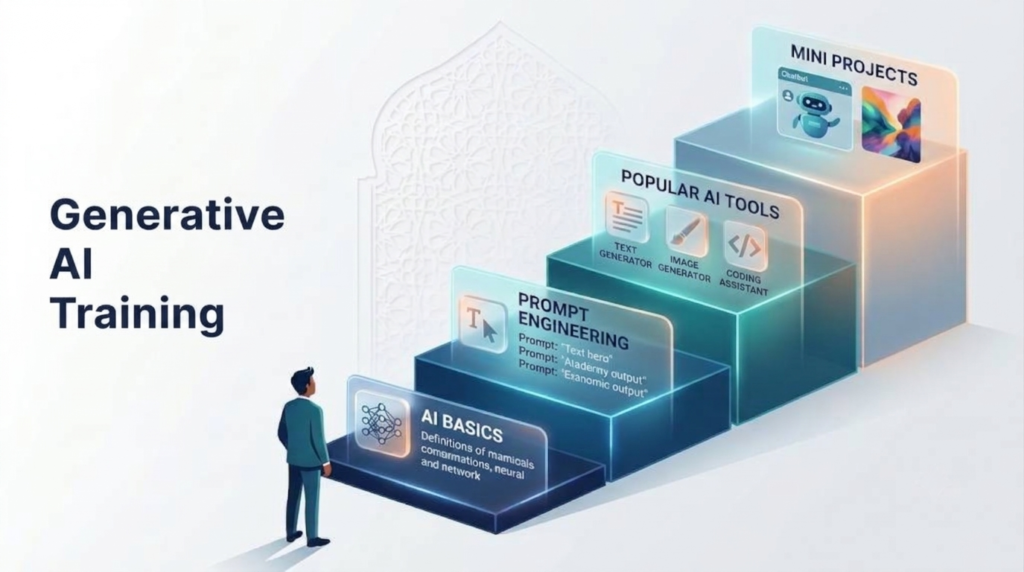
If you are completely new to AI, you do not need to learn advanced technical concepts immediately. Start with the fundamentals and gradually move towards practical applications.
1. Understand the Basics of Artificial Intelligence
Before exploring different tools, understand what Artificial Intelligence actually means.
Start by learning about:
- What Artificial Intelligence is.
- The difference between AI, Machine Learning, and Generative AI.
- How AI models generate responses.
- Where AI is used in everyday life and business.
- The limitations of AI-generated information.
This basic understanding will help you use AI tools more confidently instead of treating them as simple content generators.
2. Learn Prompt Engineering
Prompt engineering is the process of writing clear and effective instructions for AI tools.
The quality of an AI response often depends on the context and instructions you provide.
For example, instead of writing: “Write a social media caption.”
Try:
“Write three Instagram captions for a new café in Ahmedabad targeting college students. Keep the tone friendly, use simple language, and include a clear call to action.”
The second prompt provides more context and gives the AI a clearer direction.
Beginners should practise:
- Giving clear instructions.
- Defining the target audience.
- Providing relevant background information.
- Specifying the desired format and tone.
- Reviewing and improving the output.
These skills are useful across content writing, marketing, research, and business communication.
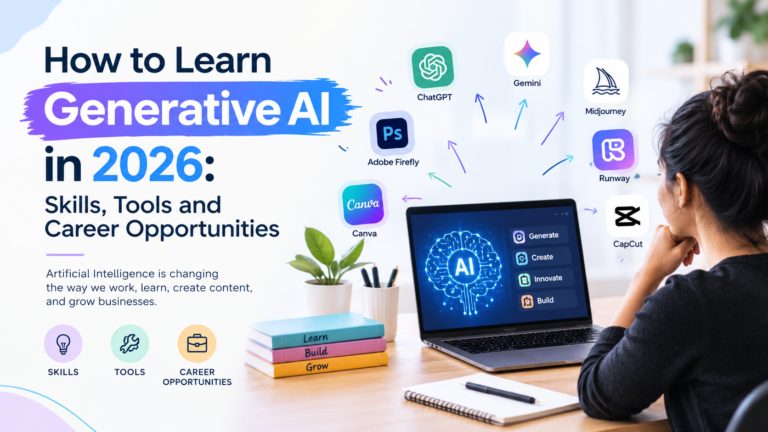
3. Explore Popular Generative AI Tools
Once you understand the basics of AI and prompting, start exploring tools based on your interests.
1. ChatGPT: Beginners can use ChatGPT for writing, brainstorming, research assistance, and planning engaging content.
2. Google Gemini: Google Gemini helps generate ideas, organise information, assist with research, and improve everyday productivity.
3. Microsoft Copilot: Microsoft Copilot supports workplace tasks, helps create and organise documents, and makes everyday work more efficient.
4. Canva AI: Canva AI allows beginners to create attractive social media posts, marketing creatives, presentations, and other visual content.
5. Adobe Firefly: Adobe Firefly helps users generate images, edit visuals, and explore creative ideas with AI-powered design features.
6. Perplexity: Perplexity supports research by helping users find information, explore topics, and discover relevant sources.
Remember to verify important information and avoid sharing confidential personal or business data with tools that are not approved for it.
4. Learn How AI Is Used in Digital Marketing
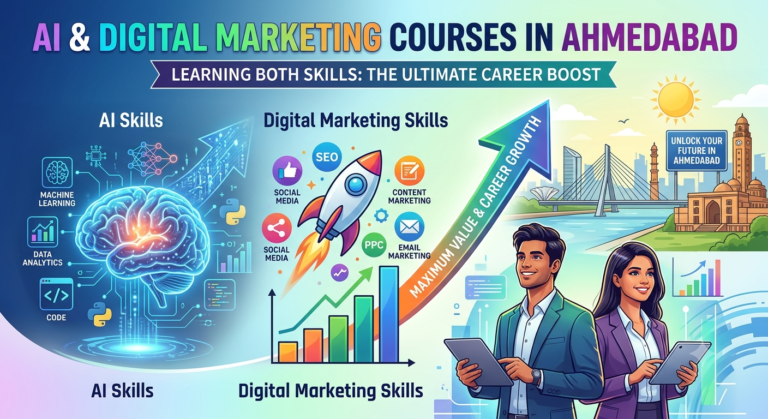
For beginners interested in marketing, combining AI knowledge with digital marketing fundamentals can be especially useful.
Start by understanding the main areas of digital marketing:
Search Engine Optimisation (SEO): Use AI to brainstorm keywords, plan content, and organise SEO research.
Social Media Marketing: Generate content ideas, prepare captions, and develop social media calendars.
Content Marketing: Create blog outlines, draft content, and improve readability with human editing.
Performance Marketing: Explore advertising copy variations and use analytics to understand campaign performance.
Email Marketing: Develop email subject lines, draft messages, and organise campaign ideas.
Learning these areas will help you understand where AI can support marketing activities and where human decision-making is still necessary.
5. Work on Practical AI Projects
Watching tutorials and reading about AI can introduce you to new concepts, but practical projects help you understand how to apply them.
Here are five beginner-friendly projects you can try:
- Social media campaign: Create a 15-day content calendar for a fictional Ahmedabad-based business.
- AI-assisted blog: Research a topic, prepare an outline, and develop an informative SEO-friendly article.
- Chatbot concept: Create a simple FAQ chatbot plan for an educational institute or online store.
- Advertising creative: Develop different headline and visual concepts for a product.
- Business report: Use a sample dataset to organise information and prepare an AI-assisted summary.
Document the tools you used, your approach, the final output, and the improvements you made. These projects can become useful additions to your portfolio.
6. Develop Critical Thinking and Responsible AI Skills
AI tools can sometimes generate incorrect, incomplete, or misleading information. Beginners should learn to review every output rather than accepting it automatically.
Develop the habit of:
- Checking facts using reliable sources.
- Reviewing AI-generated content for accuracy.
- Understanding copyright and content ownership.
- Protecting personal and confidential information.
- Identifying bias and limitations in AI responses.
- Human judgement remains important when using AI for professional work.
Career Opportunities After Learning Generative AI
Generative AI knowledge can complement several existing professional skills. Depending on your interests, experience, and practical abilities, you can explore roles such as:
- AI Content Specialist: Supports content creation and editing using AI tools.
- Digital Marketing Executive: Uses AI alongside SEO, social media, and campaign planning.
- Social Media Executive: Develops content strategies and creative ideas.
- SEO Executive: Uses AI-assisted research and content planning to support website optimisation.
- Creative Designer: Explores AI-assisted visual concepts and design workflows.
- AI Workflow Assistant: Helps businesses organise repetitive tasks and explore automation opportunities.
For students and freshers, building practical projects and developing communication skills can help demonstrate their readiness for entry-level opportunities.
How to Choose the Right AI Courses in Ahmedabad
If you are searching for AI courses in Ahmedabad, do not select a programme simply because it promises to teach many tools.
Instead, consider the following:
- Beginner-friendly curriculum: Check whether the programme explains AI fundamentals before moving to advanced applications.
- Practical assignments: Look for opportunities to use AI tools rather than only watching demonstrations.
- Industry applications: Understand how AI is used in marketing, content, design, and business.
- Portfolio development: Choose learning that encourages you to build projects you can showcase.
- Trainer experience: Look for guidance from people who understand how AI tools are applied in professional environments.
- Career guidance: Check whether the institute provides interview preparation and career assistance.
Also, review the course syllabus carefully to understand which tools, topics, and practical projects are actually included.
Learn Digital Marketing at IIEDM Ahmedabad
For beginners interested in applying AI to marketing, developing a strong foundation in digital marketing can be a useful starting point.
IIEDM Ahmedabad offers programmes designed to help students develop industry-relevant digital marketing knowledge through practical learning.
The Ahmedabad centre lists three programmes:
- Digital Marketing Certificate Program (DMCP): 3 months.
- Advanced Program in Digital Marketing (APDM): 4 months.
- Full Stack Digital Marketing Program (FSDM): 5 months.
The institute highlights expert faculty, hands-on training, live projects, case studies, and job assistance.
Students who want to learn Generative AI alongside digital marketing should check the latest curriculum and confirm which AI tools and practical modules are included in the Ahmedabad programmes.
Whether you are a college student, fresher, working professional, or entrepreneur, learning digital marketing fundamentals while exploring AI applications can help you build a broader skill set.
Visit IIEDM Ahmedabad to explore the available courses and training details.
Conclusion
Starting your Generative AI learning journey does not have to be complicated. Begin with the basics of Artificial Intelligence, understand prompt engineering, explore a few useful tools, and gradually move towards practical applications.
If you are planning to learn Generative AI in Ahmedabad, focus on developing skills that connect with your career interests. For those interested in marketing, combining AI knowledge with SEO, social media, content creation, and analytics can be a valuable approach.
Remember, the goal is not just to learn how to use AI tools. It is to understand how to use them creatively, responsibly, and effectively to solve real-world problems.