Artificial Intelligence is changing the way businesses work, create content, analyse information, and connect with customers. From AI-powered chatbots to automated marketing campaigns, Generative AI is becoming a useful technology across industries.
As businesses explore these applications, students and working professionals are increasingly interested in learning AI skills and understanding the career paths available to them.
But what does a career in Generative AI actually involve? Do you need a technical degree, and which skills should you learn first?
The good news is that AI-related careers are not limited to software engineers. Depending on your interests and existing skills, you can explore opportunities in technology, digital marketing, content creation, design, and business operations.
In this guide, we will explore Generative AI jobs in India, the skills employers may look for, and practical steps to begin your AI career journey.
What Is Generative AI and Why Does It Matter for Careers?
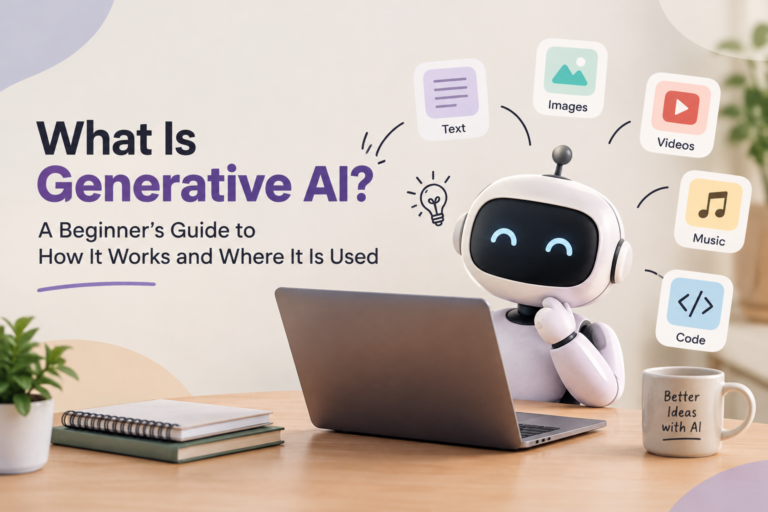
Generative AI is a type of artificial intelligence that can produce new content, including text, images, audio, video, and code, based on prompts and other inputs.
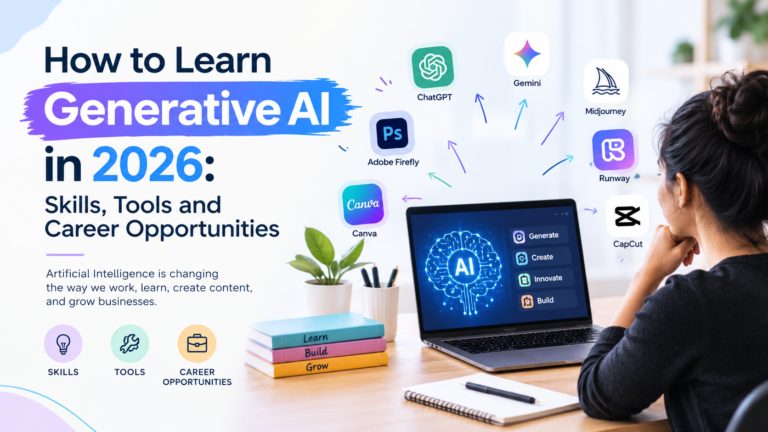
Tools such as ChatGPT, Google Gemini, and Adobe Firefly allow users to explore AI for writing, research, creative work, and productivity.
Businesses can use these tools to support content development, summarise documents, automate selected workflows, and improve customer interactions. However, AI-generated results still require human review to ensure accuracy, quality, and responsible use.
For professionals, learning how to apply AI to real business problems can complement existing skills and help them adapt to changing workplace requirements.
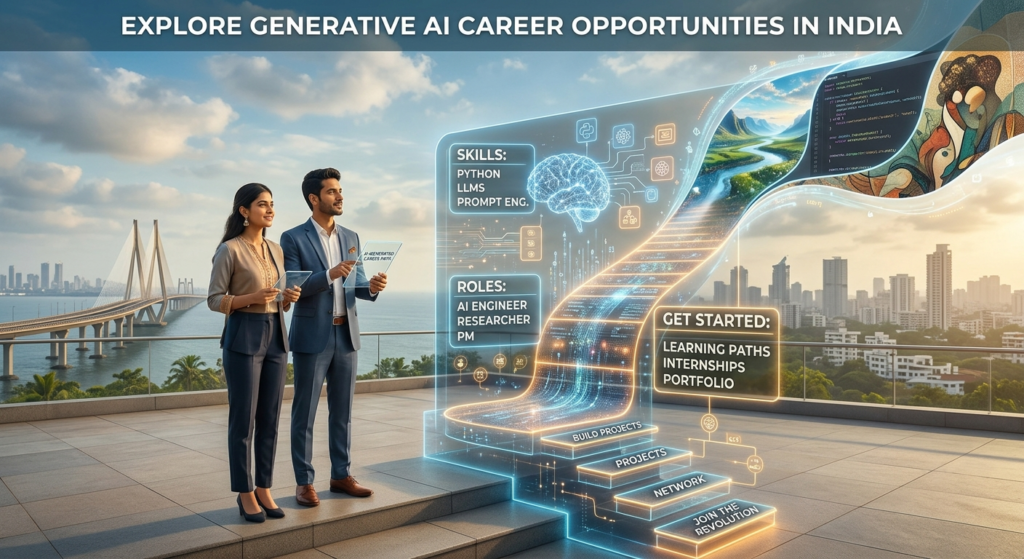
Top Generative AI Career Opportunities in India
The AI industry includes technical roles that require programming and machine learning knowledge, as well as business-focused roles that combine AI tools with domain expertise.
Here are some career paths worth exploring.
1. Generative AI Engineer
Generative AI engineers develop applications powered by large language models and other generative systems. Their work may involve integrating AI models into applications, connecting them to relevant data, evaluating their outputs, and improving reliability.
Skills to develop: Python, machine learning fundamentals, APIs, large language models, and application development. This is generally a technical career path that requires substantial hands-on practice.
2. Machine Learning Engineer
Machine learning engineers develop and maintain systems that learn patterns from data. Depending on the role, they may work on predictive models, recommendation systems, or components of Generative AI applications.
Skills to develop: Python, statistics, data processing, machine learning frameworks, model evaluation, and software development. A strong foundation in programming and mathematics is usually important for this role.
3. Prompt Engineer or AI Workflow Specialist
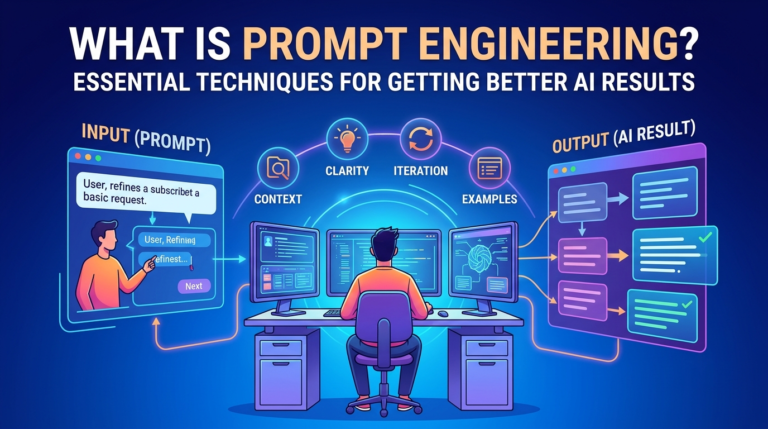
Prompt engineering involves designing and refining instructions to help AI tools produce more relevant results. AI workflow specialists may also connect AI tools with existing business processes to reduce repetitive work.
Responsibilities can include testing prompts, evaluating outputs, documenting workflows, and identifying opportunities for automation. Skills to develop: Prompt engineering, critical thinking, workflow design, tool integration, and domain knowledge. Job titles and requirements vary between employers, so learners should review actual job descriptions rather than relying on a particular title alone.
4. AI Content Specialist
AI content specialists use AI-assisted workflows to support content research, drafting, editing, and repurposing.
They may work with marketing teams, agencies, publishers, or businesses that need regular content across multiple platforms. Skills to develop: Writing, editing, research, prompt engineering, SEO fundamentals, and fact-checking. AI can speed up the initial drafting process, but human creativity, accuracy, and audience understanding remain essential.
5. AI-Powered Digital Marketing Executive
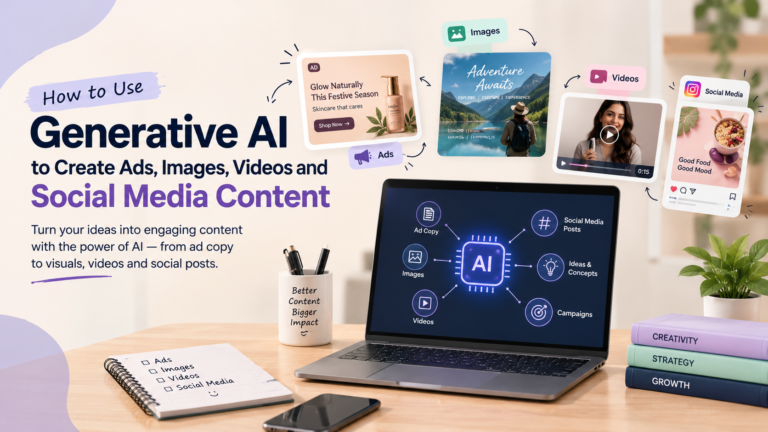
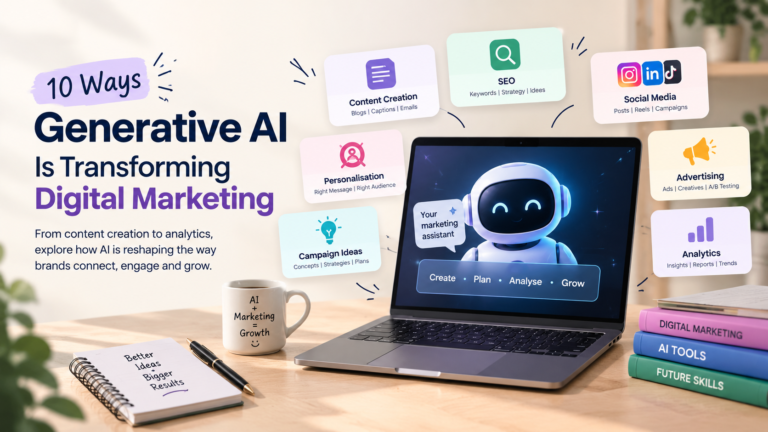
Digital marketing is another practical area where AI skills can complement existing professional knowledge. Marketers can use AI to brainstorm campaign ideas, prepare advertising copy, create content calendars, support keyword research, and summarise campaign performance.
Skills to develop: SEO, social media marketing, paid advertising, analytics, content strategy, and AI productivity tools. This pathway can be especially relevant to students who want to combine digital marketing knowledge with practical AI applications.
6. AI Product Manager or Business Analyst
AI product managers help define product goals, coordinate teams, and assess whether AI-based solutions address customer needs. Business analysts may use AI tools to organise information, document requirements, and support decision-making.
Skills to develop: Business analysis, communication, project management, problem-solving, and an understanding of AI capabilities and limitations. These roles often require prior experience in business, technology, product development, or a related field.
7. AI-Assisted Designer and Creative Specialist
Designers can use Generative AI to explore visual directions, develop early concepts, and support creative workflows. AI-assisted design may be relevant to branding, advertising, social media creatives, and digital experiences.
Skills to develop: Visual communication, graphic design, design software, creative direction, and AI image-generation tools. AI-generated visuals should be reviewed for quality, originality, and applicable usage rights.
Essential Generative AI Skills to Learn
You do not need to learn every AI tool available. Focus on skills that match the career path you want to pursue.
Prompt Engineering
Learn how to give AI clear instructions, provide context, specify the desired output, and refine responses. Practise creating prompts for writing, research, design, and problem-solving.
AI Tools and Applications
Explore tools such as ChatGPT, Google Gemini, Canva AI, and Adobe Firefly. Understand their capabilities, limitations, and appropriate use cases.
Data Literacy and Critical Thinking
Learn to interpret information, check facts, recognise misleading outputs, and make decisions based on reliable evidence.
Communication and Creativity
AI skills are more valuable when combined with strong writing, communication, collaboration, and problem-solving abilities.
Technical Skills for Advanced Roles
If you want to become an AI engineer or machine learning professional, build your knowledge of Python, statistics, machine learning, APIs, and model evaluation.
How to Get Started with a Generative AI Career
If you are a beginner, follow a structured approach instead of trying to master everything at once.
Step 1: Choose your career direction. Decide whether you are more interested in technical AI development, digital marketing, content, design, or business applications.
Step 2: Learn the fundamentals. Understand how Generative AI works at a high level, how prompts influence results, and why AI outputs need verification.
Step 3: Practise with relevant tools. Use AI tools to complete small tasks related to your chosen field. For example, a marketing learner could create a content calendar, while an aspiring developer could build a basic AI-powered application.
Step 4: Build a portfolio. Develop two or three projects that demonstrate your skills. Explain the problem, your approach, the tools used, and the final outcome.
Step 5: Gain practical experience. Look for internships, entry-level opportunities, freelance projects, hackathons, or collaborative assignments that match your skill level.
Step 6: Prepare for job applications. Update your resume, showcase relevant projects, practise interviews, and tailor applications to the requirements of each role.
Are Generative AI Jobs Suitable for Freshers?
Yes, freshers can explore entry-level opportunities related to AI, but the right starting point depends on their knowledge and practical experience.
A computer science graduate with programming skills might target junior development or data-related roles. Someone with a marketing background might begin with digital marketing, SEO, content, or AI-assisted campaign work.
Not every AI job is suitable for beginners, and learning a few AI tools alone may not be enough to qualify for a specialised technical role.
A practical portfolio, relevant foundational knowledge, communication skills, and a willingness to keep learning can help candidates demonstrate their abilities to employers.
Learn AI and Digital Marketing Skills with IIEDM
For students interested in applying AI to marketing, content, advertising, and business communication, developing digital marketing fundamentals alongside AI knowledge can be a useful starting point.
IIEDM offers AI and digital marketing programmes with practical learning, industry-oriented projects, and career support. Its website also features UI/UX design and other specialised digital skills programmes.
Learners should review the current curriculum to understand which AI tools and applications are covered and choose a programme that aligns with their career goals.
Explore IIEDM’s AI and Digital Marketing Programmes to learn more about available training options.
Conclusion
Generative AI is creating opportunities across technical, creative, marketing, and business functions. However, there is no single career path that suits everyone.
The best way to get started is to identify your interests, build relevant skills, practise with real projects, and gain experience that demonstrates what you can do.
Whether you want to explore AI engineering or combine AI with digital marketing, remember that tools alone do not build a career. Practical knowledge, critical thinking, creativity, and continuous learning are what help you turn AI skills into meaningful professional opportunities.