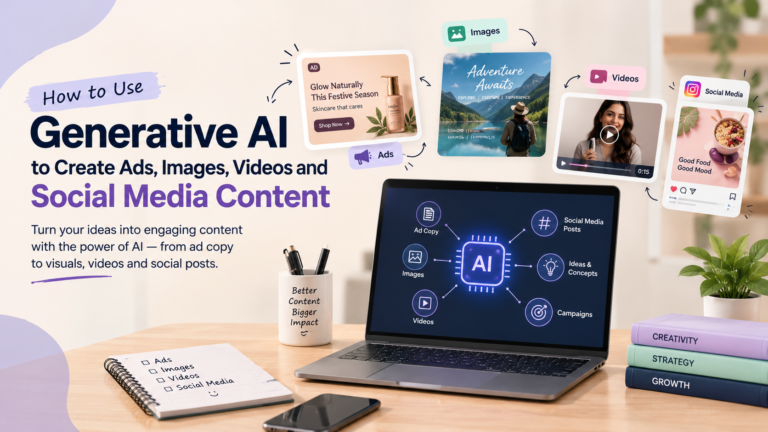
From writing social media captions to generating images, analysing data, and automating repetitive tasks, Generative AI is becoming a valuable part of the digital world. For students, fresh graduates, and working professionals, learning how to use these tools can open doors to exciting career opportunities.
But where should you start? Do you need coding knowledge? Which tools should you learn, and how can you use AI in your career?
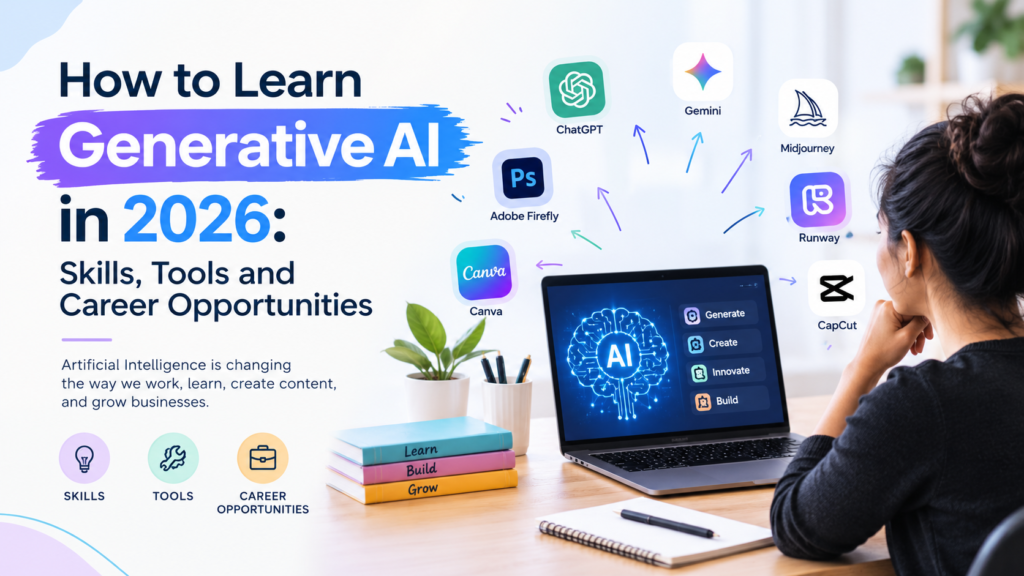
In this guide, we will explore how to learn Generative AI in 2026, the essential skills you need, the tools worth exploring, and the career opportunities available to those who combine AI knowledge with practical skills.
What Is Generative AI?
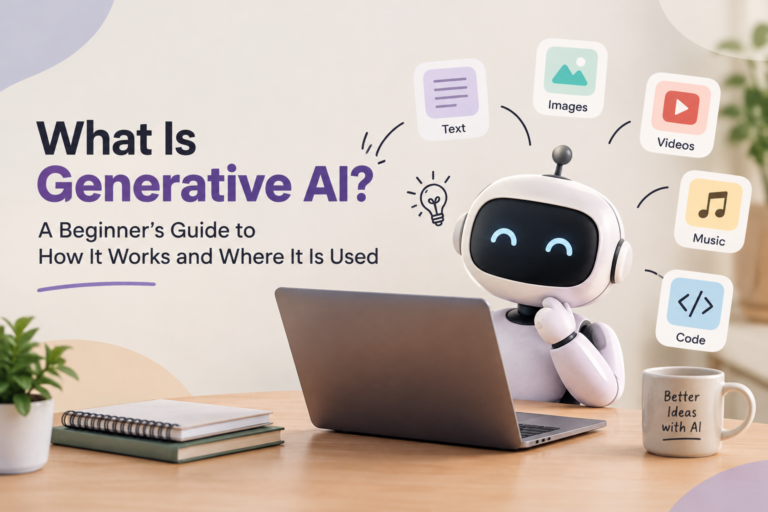
Generative AI is a type of artificial intelligence that can create new content based on the instructions, or prompts, provided by a user. It can generate text, images, videos, audio, code, and ideas.
For example, a digital marketer can use AI to brainstorm campaign ideas, a designer can generate visual concepts, and a content writer can create an initial blog outline. Businesses can also use AI to understand data, personalise communication, and improve productivity.
However, AI-generated content still requires human judgement. Checking facts, understanding the audience, maintaining originality, and ensuring quality remain important.
Why Should You Learn Generative AI in 2026?
Generative AI is becoming increasingly relevant across industries, including marketing, advertising, design, education, e-commerce, and technology. Professionals who understand how to use AI effectively can often complete certain tasks faster and explore more creative approaches.
Here is why learning Generative AI can be a valuable step:
- Better productivity: Use AI to brainstorm, summarise information, and streamline repetitive tasks.
- Creative support: Develop content ideas, campaign concepts, and design references.
- Smarter marketing: Assist with audience research, SEO planning, and personalised communication.
- Improved decision-making: Organise information and identify useful patterns in data.
- Career development: Add practical AI skills to your existing marketing, design, business, or technical expertise.
The goal is not simply to learn a new tool. It is to understand how AI can solve real problems and improve the quality of your work.
Essential Generative AI Skills You Should Develop
You do not need to master everything at once. Start with the fundamentals and gradually build skills through practice.
1. Prompt Engineering
Prompt engineering means giving AI clear instructions to produce useful results. Learn how to provide context, define your objective, specify the desired format, and refine your instructions based on the output.
For example, instead of asking an AI tool to “write a social media post,” specify the target audience, platform, brand tone, campaign objective, and call to action.
2. Content Creation and Research
Learn to use AI for brainstorming, blog outlines, email drafts, social media content, and research assistance. You should also develop the ability to fact-check information, edit AI-generated drafts, and maintain a natural brand voice.
3. Data Analysis and Critical Thinking
AI can help organise data, explain trends, and summarise reports. However, you must learn to question its answers, verify important findings, and make decisions based on reliable information.
4. Creativity and Problem-Solving
AI can generate several ideas quickly, but choosing the right idea requires human understanding. Develop your ability to identify audience needs, understand business objectives, and turn AI-generated suggestions into meaningful solutions.
5. Responsible AI Usage
Understand data privacy, copyright considerations, bias, and the limitations of AI-generated information. Avoid entering confidential business or customer information into tools without appropriate permission and safeguards.
Generative AI Tools Beginners Should Explore
You can begin learning with accessible tools before moving on to more advanced platforms.
Explore each tool based on the type of work you want to do.
- ChatGPT: Brainstorming, writing assistance, research support, and planning.
- Google Gemini: Assistance with writing, information exploration, and productivity tasks.
- Canva AI: Support for visual concepts, presentations, and marketing creatives.
- Adobe Firefly: AI-assisted image generation and creative workflows.
- Perplexity: Research assistance with linked sources that you can review and verify.
- GitHub Copilot: Coding assistance for learners interested in software development.
Features and free usage limits can change, so check each platform before choosing a tool. Remember that using a tool is only the first step; knowing when and how to use it effectively is what makes the difference.
How to Learn Generative AI Step by Step
If you are a beginner, follow a simple learning plan rather than trying to master every AI platform at once.
Step 1: Understand the Basics
Learn what Generative AI is, how large language models work at a high level, and what AI can and cannot do. You do not need advanced mathematics or coding to begin exploring everyday AI applications.
Step 2: Practise with AI Tools
Choose two or three tools relevant to your interests. Experiment with different prompts and compare the results. Try writing a blog outline, generating campaign ideas, or creating a presentation.
Step 3: Apply AI to Real Projects
Practical experience helps you understand the value and limitations of AI. Create a sample marketing campaign, build a content calendar, develop a set of design concepts, or analyse a small, non-sensitive dataset.
Step 4: Build a Portfolio
Save your best projects and explain the problem, the tools you used, your process, and the final result. Show how you reviewed and improved the AI output instead of simply presenting an unedited response.
Step 5: Consider Structured Training
If you prefer guided learning, look for training that combines AI concepts, practical assignments, expert feedback, and industry-relevant projects. When comparing generative AI courses, check the curriculum, trainer experience, hands-on opportunities, and career support.
How AI Is Transforming Digital Marketing
One of the most practical ways to learn Generative AI is to apply it to digital marketing.
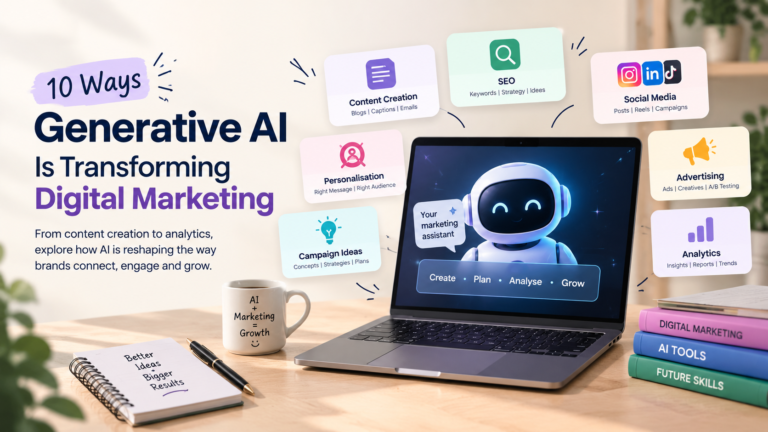
AI tools can assist with keyword research, content planning, social media ideas, advertising copy, email campaigns, customer segmentation, and performance reporting. For example, a marketer can use AI to brainstorm blog topics, develop alternative ad headlines, and organise campaign insights.
An AI in digital marketing skill set is particularly useful when combined with SEO, paid advertising, analytics, and social media expertise. AI can support the process, but marketers still need to understand search intent, brand positioning, audience behaviour, and campaign performance.
Students exploring digital marketing courses in Mumbai can look for programmes that combine foundational marketing knowledge with practical exposure to modern tools. At IIEDM, learners can explore industry-oriented digital marketing training alongside specialised options such as a social media marketing course and a UI/UX design course.
Career Opportunities After Learning Generative AI
Generative AI skills can complement several career paths. Your opportunities will depend on your existing skills, practical experience, portfolio, and the requirements of individual employers.
Some potential roles include:
- AI Content Specialist: Develop and refine content using AI-assisted workflows.
- Digital Marketing Executive: Support SEO, advertising, content, and campaign activities.
- Social Media Executive: Plan content calendars, generate creative ideas, and analyse engagement.
- SEO Executive: Use AI to support keyword research, content briefs, and search optimisation.
- Performance Marketing Executive: Assist with ad copy variations, campaign analysis, and reporting.
- Creative Designer: Use AI-assisted tools to explore concepts and develop visual assets.
- AI Workflow Specialist: Help teams identify repetitive tasks and build more efficient workflows.
You can also explore freelance projects and internships to gain experience. Digital marketing internships can provide opportunities to apply your skills to real business requirements, while practical projects can help demonstrate your abilities to potential employers.
Choosing the Right Course and Career Support
Before enrolling in any programme, compare the curriculum with your career goals. Consider the digital marketing course fees, course duration, practical assignments, trainer expertise, and whether the training includes portfolio development and interview preparation.
IIEDM offers digital marketing programmes, including three-month and five-month options, as well as UI/UX design training and specialised modules. Its website also highlights practical learning and placement assistance. Students should review the current programme details and confirm the specific AI topics covered before enrolling.
Remember that digital marketing placement is not determined by a certificate alone. Employers also value communication, problem-solving, practical knowledge, and the ability to demonstrate results. A strong portfolio and relevant internship experience can help you stand out.
Start Your Generative AI Learning Journey with IIEDM
Learning Generative AI in 2026 is about combining the right tools with the right skills. Start with the basics, practise regularly, build real projects, and learn to evaluate AI-generated results critically. Whether you are a student planning your first career, a professional upgrading your skills, or someone exploring digital marketing, consistent practice can help you move forward.
At IIEDM, you can explore industry-oriented digital marketing and design training to build a practical foundation for the digital industry.
Ready to take the next step? Visit IIEDM to explore available courses, understand the curriculum, and find a learning path that matches your career goals.