Introduction: Create Smarter Content With Generative AI
Imagine creating an advertisement for a new product, designing an eye-catching social media post, or planning a promotional video without spending hours figuring out where to begin. Generative AI is making these creative tasks more accessible to marketers, students, business owners, and content creators.
Today, AI tools can help generate text, images, video concepts, captions, and advertising ideas using simple written instructions called prompts. This makes it easier to experiment with different creative approaches and develop content for multiple digital platforms.
However, using AI effectively involves more than entering a prompt and copying the result. You need to understand your audience, communicate your ideas clearly, and review the generated content before publishing it.
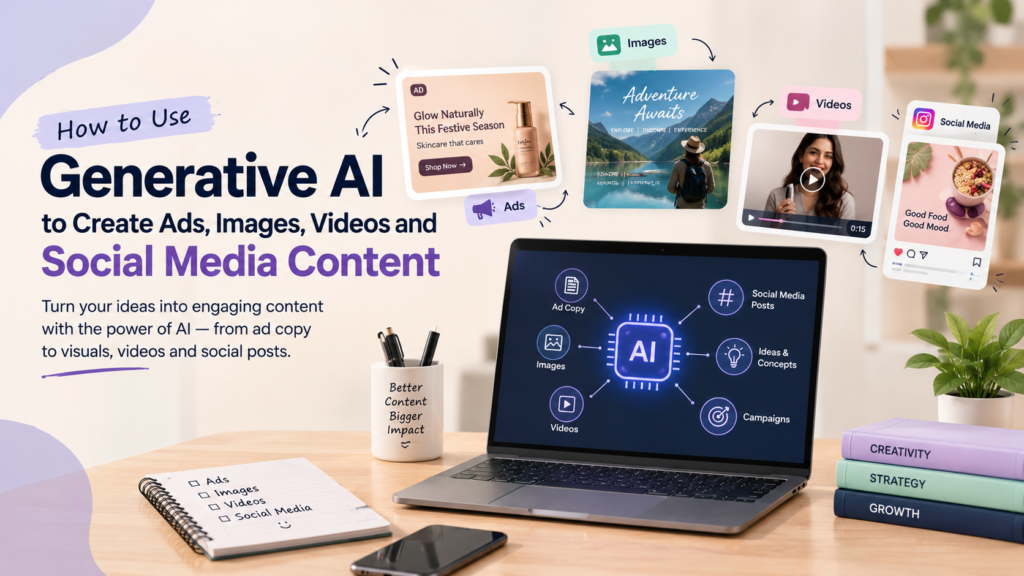
In this guide, we will explore how to use generative AI content creation for advertisements, images, videos, and social media, along with practical examples that beginners can try.
What Is Generative AI Content Creation?
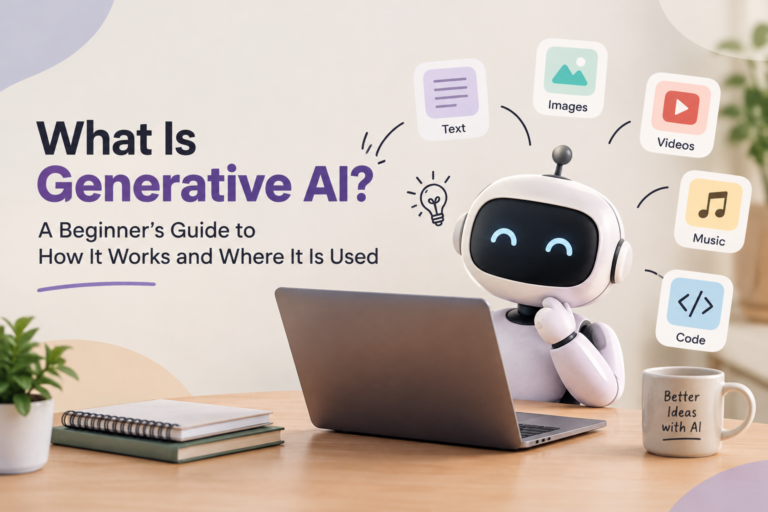
Generative AI content creation is the process of using artificial intelligence tools to produce or assist with creating content such as text, images, videos, audio, and creative concepts.
For digital marketers, it can support everything from brainstorming campaign ideas to preparing advertising copy and developing social media content calendars.
For example, a clothing brand launching a festive collection could use AI to generate campaign slogans, explore visual concepts, draft Instagram captions, and plan a short promotional video.
The important point is that AI supports the creative process. Human input is still needed to maintain brand identity, ensure accuracy, and make the final content relevant to the intended audience.
1. How to Use AI for Ad Creation
Advertising requires attention-grabbing headlines, persuasive copy, relevant visuals, and a clear call to action. AI can help marketers explore different approaches quickly.
Step 1: Define Your Advertising Goal
Before using an AI tool, decide what your advertisement should achieve. Are you promoting a product, generating leads, increasing website visits, or building brand awareness?
Your objective determines the message, audience, and type of creative you need.
Step 2: Write a Clear Prompt
For example, a business promoting an AI and digital marketing course could use this prompt:
“Write five engaging Instagram ad headlines for a digital marketing institute in Mumbai targeting college students and freshers. Highlight practical learning, AI skills, and career development. Keep the tone friendly and professional, and include a clear call to action.”An AI writing assistant can generate several headline options that you can refine for your campaign.
Step 3: Review and Test Your Ads
Choose suitable headlines, check every claim, and create variations to test.
For example, compare an ad focused on practical training with another focused on career skills. Measure click-through rates, leads, and conversion rates to understand which message performs better.
Key takeaway: AI ad creation can speed up brainstorming and copywriting, while campaign data helps determine what works.
2. How to Generate Images Using AI
Visual content plays an important role in digital advertising, branding, and social media marketing. AI image-generation tools allow users to explore visual ideas using text descriptions.
Step 1: Describe the Visual You Want
Your prompt should explain the subject, setting, colours, mood, composition, and intended use.
For example:
“Create a premium festive campaign visual for an Indian ethnic-wear brand. Feature elegant traditional clothing, warm golden lighting, rich red and cream tones, and a sophisticated studio background. Use a vertical composition suitable for an Instagram post.”
Step 2: Refine the Result
If the image does not match your vision, refine the prompt by changing the background, lighting, style, or composition.
You can generate alternative concepts before choosing one that suits the campaign.
Step 3: Prepare the Image for Publishing
Check image quality, product accuracy, brand consistency, and platform dimensions. AI-generated text within images can contain errors, so adding final headlines and logos separately in a design tool may produce better results.
Always check the relevant tool’s commercial-use terms and avoid misleading representations of real products.
Key takeaway: AI image generation helps marketers explore creative directions without having to produce every concept from scratch.
3. How to Use AI Video Generation
Video is widely used in product promotions, Instagram Reels, YouTube Shorts, and digital advertising. AI video-generation tools can help turn ideas, scripts, images, or text prompts into video clips, depending on the tool.
Step 1: Develop a Short Concept
Start with a clear objective and a simple story.
For example, a café promoting its new menu could create a 15-second video concept featuring coffee preparation, close-up shots of desserts, friends enjoying their visit, and a final invitation to visit the café.
Step 2: Write a Video Prompt or Script
Try a prompt such as:
“Create a vertical 15-second promotional video concept for a modern Mumbai café. Show close-up shots of freshly brewed coffee, desserts, warm interiors, and friends socialising. Use energetic pacing, natural lighting, and a youthful atmosphere. End with a space for the café’s name and call to action.”
Depending on the tool, you may need to generate individual clips and combine them in a video editor.
Step 3: Edit and Optimise
Add captions, music, transitions, and branding. Check that the visuals are consistent, the message is clear, and the video works without sound when appropriate.
Key takeaway: AI video generation can support faster concept development and help marketers experiment with short-form video formats.
4. How to Create Social Media Content With AI
Maintaining an active social media presence requires consistent planning and fresh ideas. AI can help simplify the process.
Generate Content Ideas
Ask an AI assistant to suggest content pillars for a skincare brand, café, clothing business, or educational institute.
Possible content pillars include educational posts, product demonstrations, customer stories, behind-the-scenes content, and promotional campaigns.
Write Captions and Hooks
AI can suggest opening lines, captions, questions, and calls to action for Instagram, LinkedIn, Facebook, and other platforms.
For example, a digital marketing institute might use a hook such as: “Want to understand how brands turn clicks into customers?”
The caption could then explain a marketing concept and invite readers to explore the topic further.
Build a Content Calendar
You can ask AI to organise content ideas into a weekly or monthly calendar, with suggested formats and publishing themes.
Review the calendar to ensure the ideas suit your audience, campaign objectives, and available resources.
Key takeaway: AI can help streamline social media planning while leaving room for original ideas and real audience interaction.
5. Repurpose One Idea Into Multiple Content Formats
One useful application of generative AI is content repurposing.
Suppose you create a blog about the benefits of digital marketing. You can use AI to turn the same topic into:
- An Instagram carousel explaining five key points.
- A short Reel script with a strong opening hook.
- A LinkedIn post sharing practical insights.
- An email newsletter summarising the article.
- A set of social media captions encouraging readers to visit the blog.
Each version should be adapted to its platform instead of copying the same text everywhere.
This approach can help businesses maintain consistent messaging while reaching audiences through different formats.
6. Essential Tips for Better AI-Generated Content
To get useful results from AI tools, follow these practices:
Be specific with prompts: Include your target audience, objective, tone, format, and desired outcome.
Maintain brand consistency: Use your brand’s approved colours, messaging, and visual identity.
Fact-check the content: Verify statistics, product details, prices, and other important claims before publishing.
Keep the human touch: Add original experiences, insights, humour, and cultural context that make content feel authentic.
Respect copyright and privacy: Check usage rights and avoid uploading confidential information into tools without appropriate permission.
Measure performance: Track engagement, clicks, conversions, and other relevant metrics instead of assuming AI-generated content will automatically perform better.
Learn Practical AI and Digital Marketing Skills With IIEDM
Knowing about AI tools is a useful starting point, but learning to apply them to real marketing tasks can help you develop more practical skills.
IIEDM offers digital marketing training in Mumbai, including digital marketing and social media marketing programmes, as well as a UI/UX design course. Its website highlights hands-on learning, live projects, and career preparation as part of its training approach.
Through practical learning, aspiring marketers can explore how AI-assisted content creation fits into broader activities such as campaign planning, social media strategy, advertising, design, and performance analysis.
If you are comparing digital marketing courses in Mumbai, consider the curriculum, practical projects, faculty experience, career support, and current course fees before making a decision.
Students exploring digital marketing careers can also ask about internship opportunities, placement assistance, and the practical work they will complete during training. Actual outcomes depend on individual skills, experience, and available opportunities.
Explore IIEDM’s programmes on the official website: https://iiedm.com/
Conclusion: Turn AI Ideas Into Practical Marketing Skills
Generative AI is creating new possibilities for advertisements, images, videos, and social media content. It can help marketers brainstorm faster, explore creative directions, and adapt ideas for different platforms.
However, successful content still depends on understanding the audience, developing a clear strategy, and reviewing every output carefully.
The best way to learn is to practise. Start with a simple ad, create a visual concept, develop a short video script, and turn one idea into multiple social media formats.
Ready to explore AI-powered marketing? Visit IIEDM to discover learning opportunities that can help you develop practical digital marketing and creative skills.